


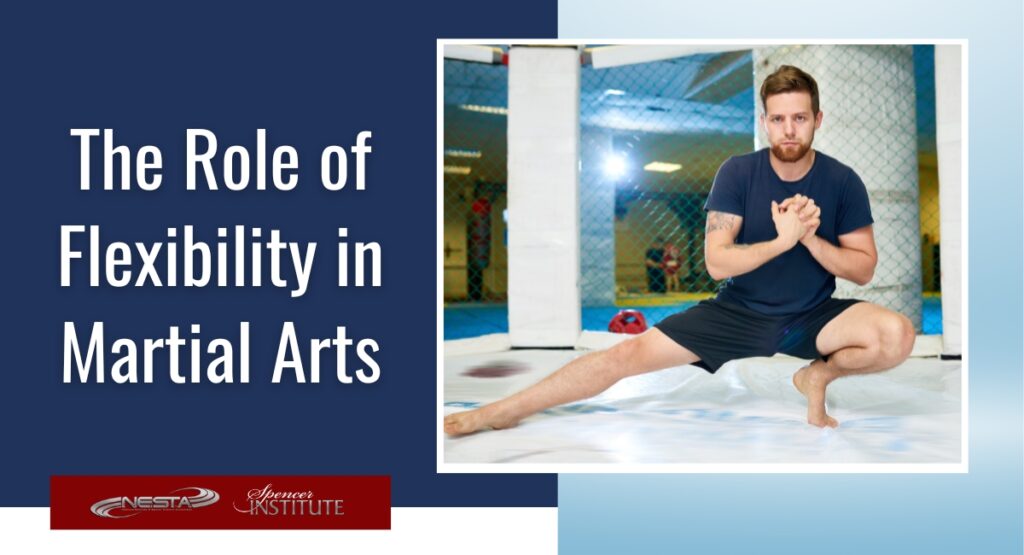
The Role of Flexibility in Martial Arts: Achieving Mastery through Science and Practice
Flexibility is a paramount attribute that holds a pivotal role in the practice and mastery of any martial art. Its significance lies not only in the grace and beauty of high kicks and dynamic movements but also in its tangible impact on performance, injury prevention, and overall martial arts proficiency.
In this comprehensive report, we delve into the multifaceted importance of flexibility in martial arts, exploring its numerous benefits, evidence-based training methods, and the profound impact it can have on a practitioner’s journey to excellence.
If you are interested in all aspects of conditioning for martial arts, you will want to learn about becoming a Certified MMA Conditioning Coach through the Mixed Martial Arts Conditioning Association.
Enhanced Range of Motion
In martial arts, a broad range of motion is vital for executing techniques with power and precision of each technique. Flexible muscles and joints allow practitioners to kick higher, punch farther (greater rotation), and execute complex techniques more fluidly. For instance, in Taekwondo, a martial artist with enhanced hip and hamstring flexibility can deliver impressive head-level kicks, while a well-stretched shoulder girdle enhances the execution of powerful boxing punches.
Case Study: A study conducted by the Journal of Sports Science and Medicine found that elite Taekwondo athletes with greater hip flexibility demonstrated higher scores in accuracy and speed during high kicks. This indicates the direct correlation between flexibility and technical performance in martial arts.
Injury Prevention and Faster Recovery
A flexible body is less prone to injuries, as it can absorb impact and strain more effectively. Regular flexibility training helps to maintain muscle and joint suppleness, reducing the risk of sprains, strains, and tears during intense martial arts training and competitions. Moreover, increased flexibility facilitates quicker muscle recovery after intense workouts, enabling practitioners to return to training with reduced soreness and enhanced readiness.
Clinical Information: A systematic review published in the International Journal of Sports Physical Therapy highlighted the positive effects of flexibility training in injury prevention among athletes, including martial artists. The study concluded that a combination of static and dynamic stretching significantly reduces the risk of overuse injuries and muscle strains.
Fluidity of Movement
Martial arts require practitioners to move with grace and fluidity, seamlessly transitioning between different techniques. Flexibility plays a key role in achieving this fluidity, allowing martial artists to move smoothly and efficiently during combat scenarios. For disciplines like Capoeira, where acrobatics and swift transitions are central, a flexible body enables practitioners to execute complex moves with grace and precision.
Evidence from Practice: Renowned martial artists who emphasize the importance of flexibility include Bruce Lee, who attributed his agility and fluidity to rigorous flexibility training and stretching routines. His unparalleled skill in martial arts demonstrated how flexibility contributes to the seamless blending of techniques.
Optimizing Kicking Techniques
High kicks are iconic in many martial arts styles, such as Taekwondo, Karate, and Muay Thai. To deliver powerful high kicks with precision, a martial artist needs both strength and flexibility. Proper hip and hamstring flexibility, combined with strong hip abductors, enables the execution of impressive head-level kicks, providing a tactical advantage in combat scenarios.
Clinical Research: A study published in the Journal of Strength and Conditioning Research found that athletes who engaged in regular flexibility training significantly improved their hip and hamstring flexibility, resulting in increased kicking height and power. This study underscores the role of flexibility in optimizing kicking techniques.
Injury Resilience for Grappling and Groundwork
In grappling-based martial arts like Brazilian Jiu-Jitsu and Judo, flexibility is essential for navigating various positions and executing submissions effectively. Techniques that require twisting, bending, and contorting the body, such as armbars and triangles, rely heavily on joint and muscle flexibility.
Case Study: A study conducted at a Brazilian Jiu-Jitsu academy observed practitioners who participated in a flexibility-focused training program. The results showed that those with increased hip and shoulder flexibility displayed better fluidity in transitions and submissions during sparring sessions, leading to higher success rates.
The scientific evidence and case studies presented in this article underscore the paramount importance of flexibility in martial arts. From enhanced range of motion to injury prevention, fluidity of movement, and optimized kicking techniques, flexibility is an indispensable attribute for martial artists seeking mastery. As practitioners incorporate evidence-based flexibility training methods into their regimen, they not only improve their technical performance but also safeguard their bodies against potential injuries. Embracing flexibility as a foundational aspect of martial arts practice will undoubtedly elevate practitioners’ skills, inspire confidence, and drive them toward true mastery in their chosen art form.
Educational Resources
If you are interested in all aspects of conditioning for martial arts, you will want to learn about becoming a Certified MMA Conditioning Coach through the Mixed Martial Arts Conditioning Association. Additionally, becoming a NESTA Certified Sport Yoga Instructor is a perfect complement for people who work with martial artists.